
Prove your AI agents and models are safe
Your AI agent goes wrong overnight. Who decides what in the morning?
An agent incident is not an outage. The system stays up, the logins are valid, and the damage is a stream of decisions that each looked fine on its own. Fraud sees losses, IT sees a healthy service, the business sees throughput, and each assumes someone else owns it. When the regulator or a journalist calls, most teams would work it out on the day.
Built for Banks, insurers, fintechs running AI in claims, onboarding, servicing or fraud work; COO, CRO, Head of Operational Risk, Chief AI Officer
The problem in numbers
What the public record shows
Every figure links to the page it came from, with its date.
72 hours
the longest a covered firm may wait to notify New York's financial regulator after determining a cybersecurity incident has occurred, under the same rule that requires incident response plans
law.cornell.edu, 2023-11
650.88
Canadian dollars awarded in damages for negligent misrepresentation in the Air Canada chatbot case, the gap between the bereavement fare and the price the customer actually paid
dentonsdata.com, 2024-02
40 percent
is the floor: Gartner expects more than this share of agentic AI projects to be cancelled by the end of 2027, with insufficient risk controls among the reasons
theregister.com, 2025-06
What you get
The deliverables
You get a facilitated exercise for your executive and risk team on public and synthetic data, a scored after-action report and a written record of decision rights.
A scenario built around your agent
A realistic failure for the kind of agent you actually run, with new facts dropped in during the session: a second batch of bad approvals, a customer post on social media, an email from the regulator.
A scored after-action report
Where decisions held, where they stalled, and where people improvised, with the first things to fix listed in order.
A written record of decision rights
Who can pause the agent, who can reverse its decisions, who tells the regulator and who speaks to the press, and on what trigger.
How it runs
3-hour session or on-site half day, start to finish
3-hour session or on-site half day
Short scoping call
We agree which agent the scenario is about, who should be in the room and what your current incident plan says.
The exercise
Amir runs the scenario on the clock. Named people make the calls: pause or not, reverse or not, notify or not.
Report and decision record
You receive the scored after-action report and the written decision-rights record after the session.
Method
How the answer is produced
Built on your real deployment
The scenario follows the agent you run and the systems it touches, so the gaps it finds are your gaps, not a generic case study.
Public and synthetic data only
No production systems or customer records are used. That keeps the exercise realistic and easy to approve.
Decisions recorded as they happen
Every call is logged with who made it and when, so the report rests on what happened in the room, not on memory afterwards.
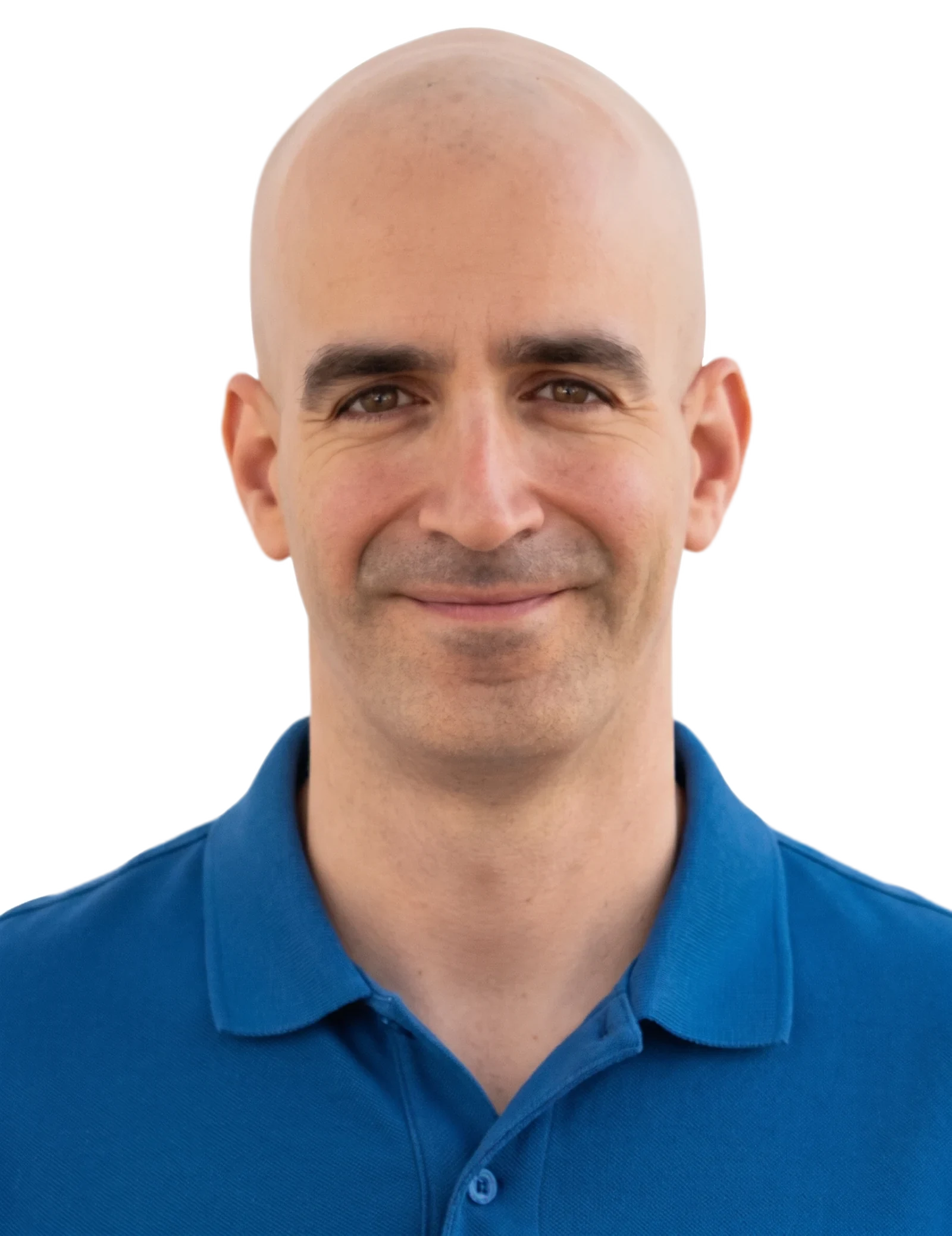
Why Amir
Designed and led by someone who has built fraud models in production
The patents closest to this problem:
Amir is a named inventor on US 12,476,990 B2 (Method and system for early detection of malicious behavior based using self-supervised learning, filed at Skyhawk Security; granted).
Covers learning what normal cloud activity looks like so early signs of malicious behaviour stand out, the same idea as spotting an agent drifting from its normal pattern before an incident grows.
View on Google PatentsAmir is a named inventor on US 12,634,298 B2 (Security posture management methods and systems using threat detection and response data, filed at Skyhawk Security; granted).
Uses live threat findings to decide which security misconfigurations to fix first, the same ordering the after-action report gives.
View on Google PatentsThese patents were filed at the companies named. They show the problems Amir has worked on; they are not Riskernel products.
Is this you
You probably need this if
- You run an AI agent in production, or just announced one, in onboarding, servicing, fraud or AML work.
- Nobody has written authority to switch the agent off without first calling a meeting.
- Your yearly incident test covers outages and breaches but has never played out an agent making bad decisions.
- You could not quickly list every action the agent took in the last 12 hours.
- Legal, communications and risk have never agreed one account of an agent failure in advance.
Questions
Before you reach out
Do you need access to our systems?
No. The exercise runs on public and synthetic data. We only need a description of the agent, what it can do and your current incident plan.
Who should attend?
The people who would really decide on the day: operations, risk, fraud, IT, legal and communications, plus the business owner of the agent. About six to ten people works well.
How long does it take?
A 3-hour session, or an on-site half day. The report follows after the session.
Does this count as our yearly incident test?
It can feed into it, but your compliance team decides that. The tabletop adds the one scenario most yearly tests leave out: an agent that keeps running and makes bad decisions.
Scope AI Agent Incident Tabletop with Amir
Tell Amir what you run and what worries you. He replies with a short scope outline.