
Fraud vendors and third-party AI
If your fraud vendor went dark tomorrow, how much fraud would you still catch?
An outside fraud model is often why a fintech could launch fast. Picture a fintech two years after launch: the vendor's score is wired into onboarding, payments and payouts, the in-house rules are stale, and nobody has run a single day without it. When one outside provider fails, everyone who depends on it fails at the same moment, and the fallback you never tested becomes your whole defense.
Built for Fintechs and banks that depend on one outside fraud model or scoring vendor; VP/Head of Fraud, CRO, Head of Vendor Risk
The problem in numbers
What the public record shows
Every figure links to the page it came from, with its date.
8.5 million
Windows devices Microsoft estimated were knocked out by one faulty update from a single security vendor, CrowdStrike, in July 2024
blogs.microsoft.com, 2024-07-20
85 million
US dollars: the gap between what end users of Synapse, a bankrupt fintech middleman, were owed and what its partner banks held, per the trustee's court report
bankingdive.com, 2024-06-12
7,400
active clients, including banks, of ClearSale, a Brazilian card fraud vendor that Experian agreed to buy in October 2024, per Alliance News via AJ Bell
ajbell.co.uk, 2024-10-04
What you get
The deliverables
You get an exit-readiness scan, then, if you choose, a backup fraud model built inside your own cloud and tested on held-out data, with an exit-test report signed by Amir Shachar.
Exit-readiness scan
What each flow does when the vendor times out, what data you hold yourself, and where the contract and runbook leave gaps.
A number for the fallback
How much fraud your current fallback would catch, and how many good customers it would decline, on recent traffic.
Optional backup model
If you continue, a backup fraud model built inside your own cloud and tested on held-out data. How Riskernel's scoring service takes part is agreed when the build is scoped.
Signed exit-test report
How the backup performs on held-out data from your own traffic, signed by Amir Shachar and written so a sponsor bank or examiner can read it.
How it runs
A scan first, then an optional build; timeline agreed on a short call, start to finish
A scan first, then an optional build; timeline agreed on a short call
Scan
Code-level check of timeout behavior, an inventory of your labels and features, and a read of the exit terms in the contract.
Decision point
You decide whether to build. The scan stands on its own.
Build and test
A backup model is built in your cloud, tested on held-out data, and written up in an exit-test report signed by Amir Shachar.
Consent. Read-only access to code, data and contracts you choose to share. Any build runs in your own cloud with access you grant and can revoke.
Method
How the answer is produced
Find out in code, not from memory
Whether a timeout approves, declines or queues is read from the integration itself, flow by flow.
Your data, your cloud
The backup is built inside your own environment on data you hold, so it stays yours.
Held-out testing
The backup is scored on data it never saw while being built, so the exit-test numbers are honest.
No need to leave your vendor
The goal is to know your options with numbers before anyone asks.
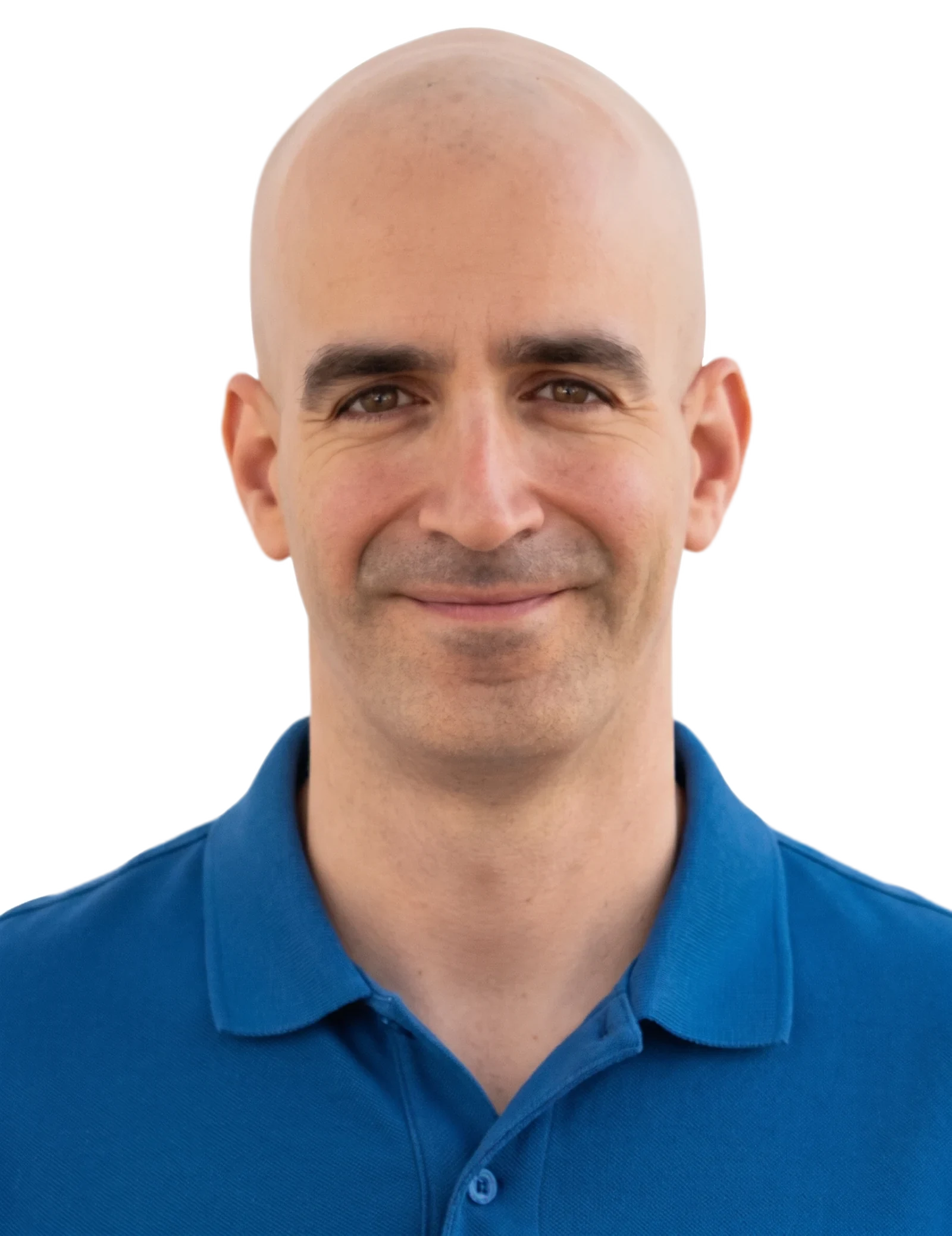
Why Amir
Designed and led by someone who has built fraud models in production
The patents closest to this problem:
Amir is a named inventor on US 2023/0237494 A1 (Systems and methods for automatically creating machine learned fraud detection models, filed at NICE Actimize; pending).
Amir is a named inventor on US 2023/0237494 A1 (Systems and methods for automatically creating machine learned fraud detection models, filed at NICE Actimize, pending), related to building fraud models quickly.
View on Google PatentsAmir is a named inventor on US 12,626,151 B2 (Method and system for testing a classification machine learning (ML) model of a tenant of a service provider, in a cloud-based environment, filed at NICE Actimize; granted).
Amir is a named inventor on US 12,626,151 B2 (Method and system for testing a classification machine learning (ML) model of a tenant of a service provider, in a cloud-based environment, filed at NICE Actimize), related to testing a client's classification model before it goes live.
View on Google PatentsThese patents were filed at the companies named. They show the problems Amir has worked on; they are not Riskernel products.
Is this you
You probably need this if
- One outside vendor's score decides onboarding, payments or payouts.
- Your fallback rules were written at launch and have not been tested since.
- You cannot produce your own table of transactions with confirmed fraud outcomes, independent of the vendor.
- Your vendor was acquired, had an outage or is up for renewal.
- A sponsor bank or regulator has asked about third-party concentration or termination planning.
Questions
Before you reach out
Do we have to switch vendors?
No. You can keep your vendor. The point is a tested fallback and an exit plan with numbers.
Is the build required?
No. The scan stands on its own, and the build is a separate decision.
Does our data leave our environment?
The backup model is built inside your own cloud. Access is agreed before work starts.
Who reads the report?
It is written for your fraud and risk leads, and so a sponsor bank or examiner can follow it.
Scope Fraud Vendor Exit Plan with Amir
Tell Amir what you run and what worries you. He replies with a short scope outline.